U.S. boatbuilders wary of foreign invasion A group of U.S. sailboat manufacturers offered ideas of how to ward off foreign competition at a time when the industry is already plagued by a sagging dollar, high fuel prices, costly boat insurance, shrinking public access to the coast, a nationwide mortgage lending crisis and, in some respects, the Iraq war, at a forum during the Newport Boat Show.
“All of these factors contribute to the malaise,” said Pat Burke, chief executive officer at Pearson Composites and one of three industry experts who recently shared their views on how U.S. boat manufacturers are fairing in the global marketplace. Despite such obstacles, Burke said the advent of globalization creates “an absolutely spectacular moment for boatbuilders and consumers.”
Foreign companies are trying to establish beachheads in the U.S. for several reasons: Shipping boats across an ocean is expensive and reduces profits; currency exchanges can be burdensome; overseeing quality control from afar is nearly impossible; and getting close to American customers is less likely when the company is located abroad.
To ensure Pearson Yachts remains strong, the company is looking at ways to expand its market, Burke said. “We’re trying to get a fix on where the leisure dollars are going. Who are we missing? How can we expand our markets? Our kids are not going to boat the same way as we do,” said Burke, citing the ski industry’s success in introducing snowboarding to the next generation, and the growth of fractional boat ownerships. “This kind of thinking out of the box is what the boating industry needs.”
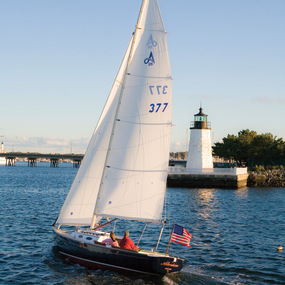
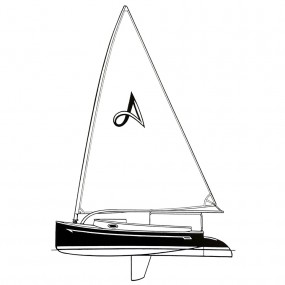
Burke said Pearson is focused on innovation, investing in robotics to better control production, and pushing its Alerion and True North series of high-end daysailers. The company, which previously sold boats direct from its factories, has signed up distributors and service organizations.
Wayne Burdick, president of Beneteau USA, was among those who joined Burke as part of a panel discussion in September. Boat manufacturers must be like sailors tuned to wind shifts, Burdick said.
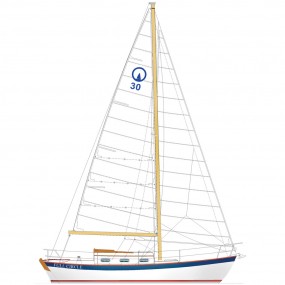
Examples: the ability of Poland to quickly emerge and compete for a share of the U.S. sailboat market, and of China to cheaply manufacture a 30-footer and ship it across the ocean in a container. Islamic lands and several previously unstable South American countries also have emerged as strong competitors, he said, noting that Japanese diesel engines are gaining popularity while Indonesian factories are busy sewing sails. “We must adapt to meet globalization,” Burdick said. “It can be painful, but it’s inevitable.”
His defense strategy: operate in a leaner mode, cut labor costs and, most importantly, build well-made boats and provide dependable customer service. Burke acknowledged the benefit of low-cost labor, explaining that 10 to 20 percent of a Pearson sailboat’s manufacturing cost is labor.
In the U.S., where workers often receive $20 an hour, a relatively basic sailboat requiring 25 hours to construct would translate to a labor cost of about $50,000. Building a more complex boat, requires exponentially more labor hours, pushing the overall labor cost into six digits. However, if the same boat were built in South Africa, the savings in labor costs would make it feasible for the manufacturer to absorb the overseas shipping expense and still turn a hefty profit.
--David Liscio