
5 Great Small Boats for Big Sailing Adventures
These small but mighty classic cruisers can take sailors on offshore voyages or coastal hops in comfort and safety
Who says you need a big boat for a big adventure? Self-sufficient sailors have long turned to sturdy little crafts for passages in challenging waters from lakes to oceans. Not only are small boats simpler with fewer systems to maintain, they are also typically more affordable to buy and refit.
Some of our favorite great little boats, all of which have proved themselves many times over, are available on the used boat market. If you’re fortunate enough to find one in good shape, you probably won’t be the only sailor interested. Whether you’re looking to trailersail across the country, cross an inland sea or even sail around the world, these five boats can take you there.
West Wight potter
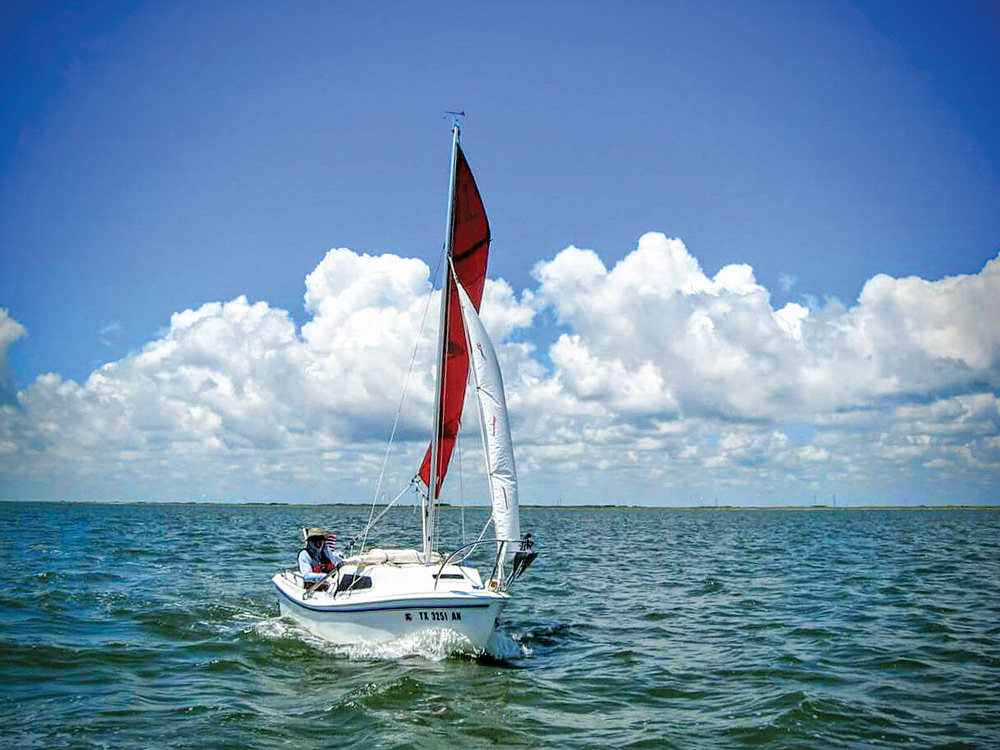
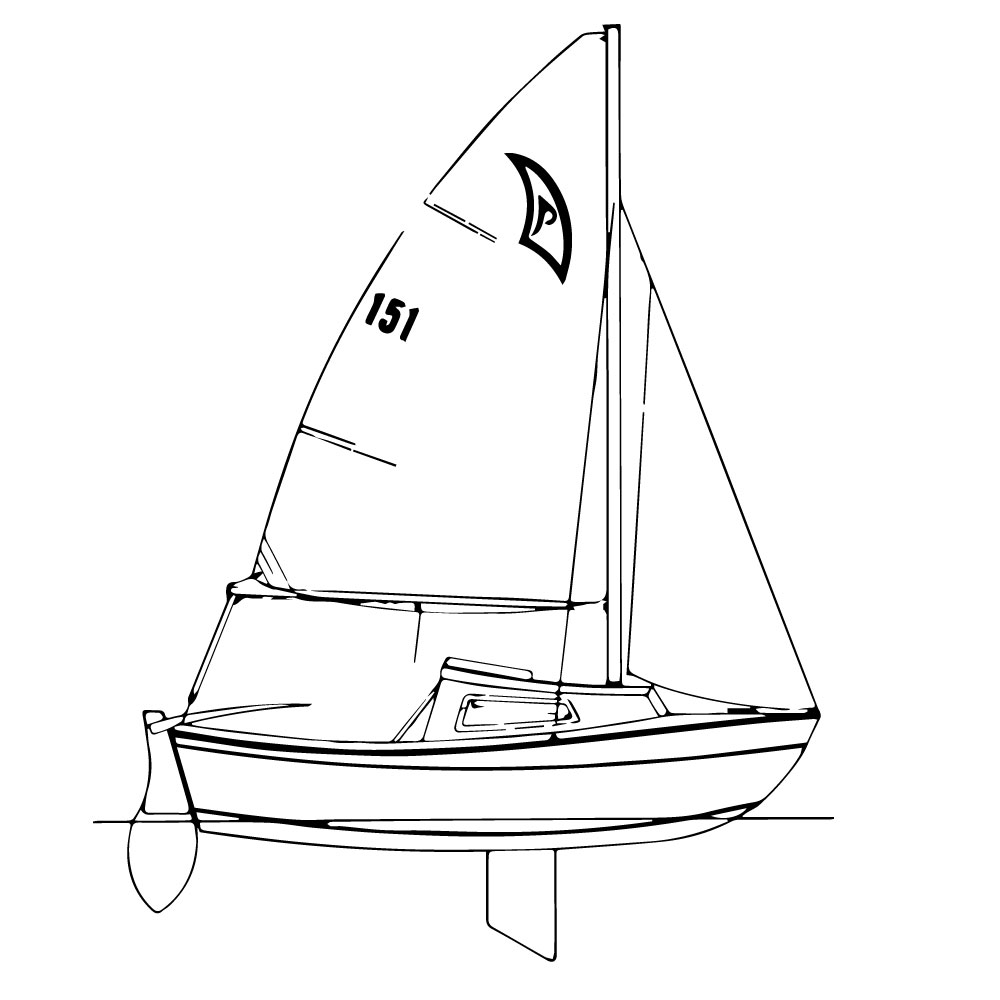
The West Wight Potter is the archetypal sailboat, looking like the product of untold numbers of boats sketched hastily on paper. It is also one of the most efficient uses of space you can find on a boat.
Four bunks, a porta potty, a sink and a marine stove all fit in the cabin without making it seem cramped and the 5-foot-long cockpit is downright spacious on a boat that’s just under 19 feet long.
It’s also beachable, making it an ideal camper sailer. Many owners rig up cockpit tents to expand the sleeping and living quarters a little.
The boat can be set up and launched singlehandedly, but some modifications may be necessary to make it more convenient to sail singlehandedly.
The mainsail has about 90 square feet of sail area, although some owners have added a bit of roach and the 110% genoa roughly doubles that sail area (a smaller lapper sail offers balance). There’s also a small spinnaker. The West Wight Potter isn’t a rocket ship, although legions of its fans will rebut that, claiming that 6 knots of boat speed possible with a good set of sails, but either way, speed isn’t the draw. Easy sailing, stability, thanks in part to the hard chine hull, and even comfort are the order of the day.
And plenty of sailors worldwide have discovered those attributes. More than 1,700 West Wight Potters have been built since its 1971 debut and its owners have formed one of the tightest communities of any cruising boat. In addition to active groups online, owners enjoy rendezvous and gatherings.
The West Wight Potter is no slouch in the seaworthiness department. Sailors have cruised the Caribbean, the Great Lakes, sailing from California to Hawaii and crossed the Atlantic.
International Marine, which built the 19-footer and its little sister, the West Wight Potter 15, no longer builds the boats in the U.S. Used boats can be picked up for about $3,500 or much less for boats in rougher condition.
Introduced two years ago, the Malbec 18 is a worthwhile successor to the Potter 19. Incorporating some of the Potters best features and improving on some of its shortcomings, the Malbec may not have yet achieved the fame of the West Wight Potter, but it seems likely it’s on its way.
LOA 18’9”; LWL 16’4”; Beam 7’6”; Draft keel down 3’7”, keel up 6”; Ballast 300 lbs.
Displacement 1,225 lbs.; Sail area 182 sq. ft. www.westwightpotter.com
Flicka 20
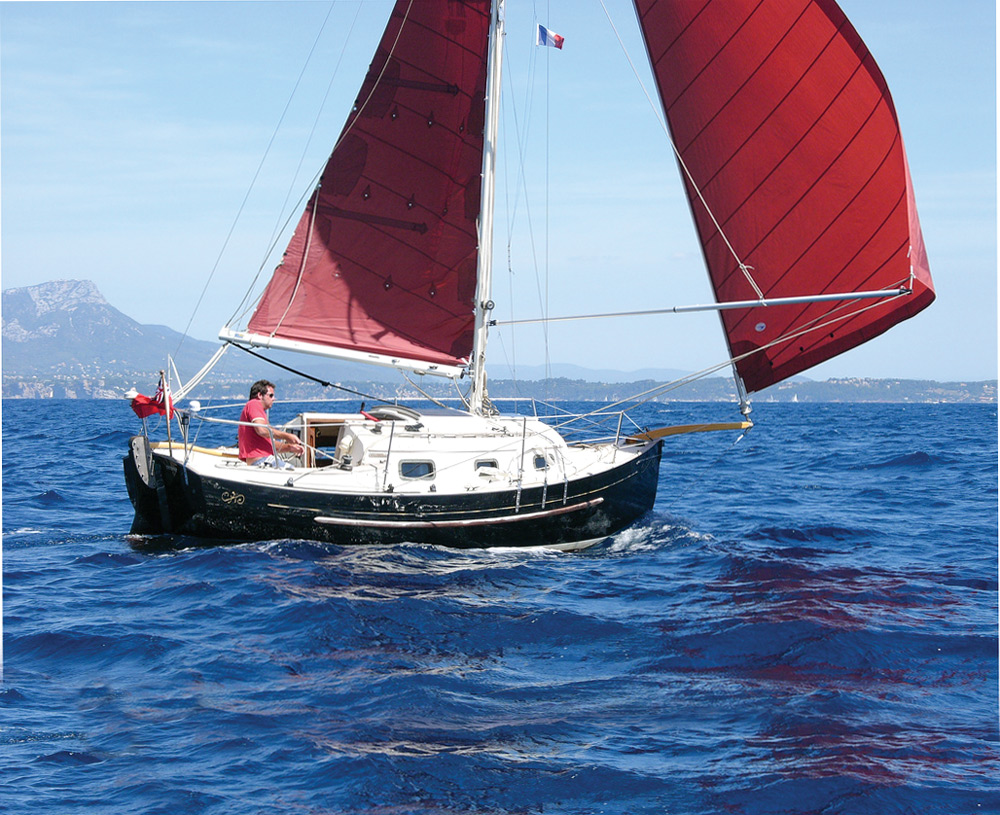
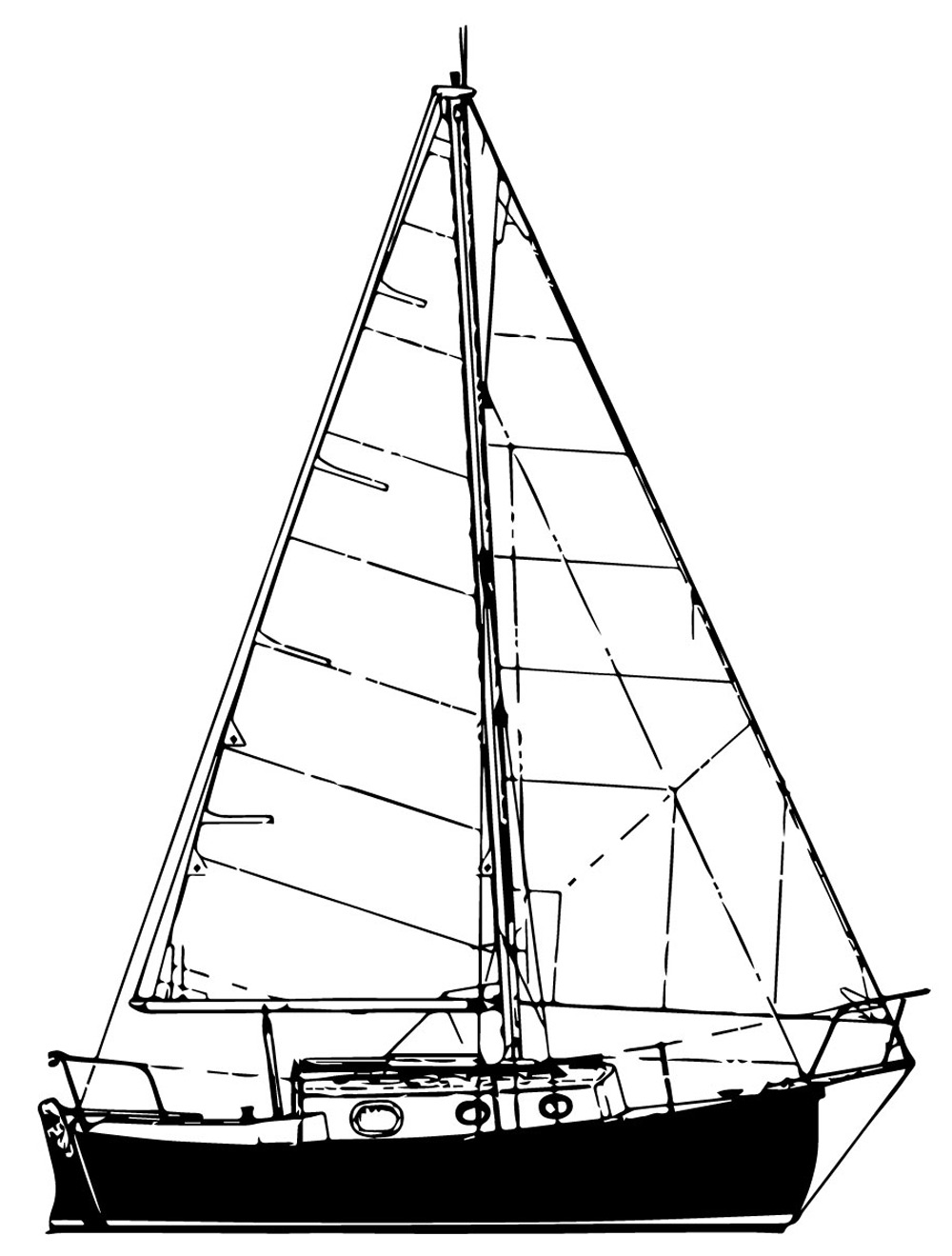
Bruce Bingham designed the Flicka 20 to do big things. Inspired by the small but capable workboats of Narragansett Bay, the design was submitted to Rudder Magazine in 1972 and published in six parts, with instructions for DIY ferrocement construction.
Although few Flickas were built in ferrocement, for two years beginning in 1975 the boat was sold as a kit, but was picked up by Pacific Seacraft in 1977 built as a completed boat. It was under Pacific Seacraft’s care that the boat became something of a legend.
A thick teak caprail seals the hull-to-deck joint where the solid fiberglass hull meets the balsa-cored decks.
The deck-stepped mast carries 243 square feet of sail area, and the boat can get going at a nice pace, particularly on a reach.
Most Flickas have inboard diesel engines accessed through the cockpit sole, but this becomes a large storage area on boats with outboards.
The cabin belies the boat’s size. With nearly 6 feet of headroom, it is remarkably livable down below. It’s also finished in a manner more likely to be seen on a much larger boat, and to a degree often not found even on large new boats sold today. Teak joinery is prevalent and the boat boasts a galley with a two-burner stove, a sink and an icebox.
There is a proper head compartment as well, although some boats have marine heads and others have porta potties. The sleeping accommodations are primarily a V-berth as the settee is rather short.
SAILING Contributing Editor John Kretschmer wrote of the living conditions that, “Two people, preferably young, agile and very much in love, can cruise long-term on a Flicka and maintain a standard of living beyond camping out.”

More than 400 Flicka 20s were built by Pacific Seacraft until 2007. Despite its size, it was never an inexpensive boat; that kind of build quality doesn’t come cheap. But as the boats have aged they’ve come down in price, and they can be picked up for prices starting at about $20,000.
Many have been customized by previous owners, the sign of a well-loved boat. And what’s not to love in a boat that offers access to the world with just 20 feet of boat.
LOA 24’; LWL 18’2”; Beam 8’; Draft 3’3”; Sail Area 243 sq. ft.; Displacement 5,500 lbs.; Ballast 1,800 lbs. www.flicka20.com
Dana 24
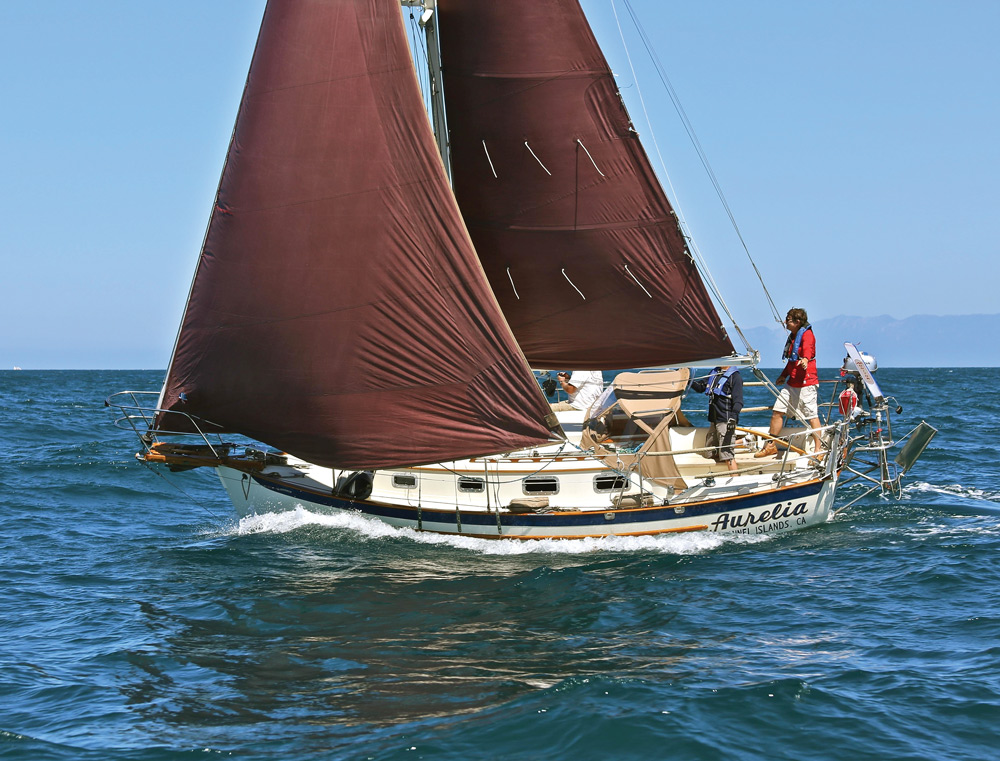
Few would argue the fact that Bill Crealock was a skilled yacht designer responsible for many wonderful designs. But when a Dana 24 owner who lived onboard for five years and sailed more than 10,000 miles, including a transatlantic passage, declares Crealock to be “a genius,” you know the designer hit on something special.
Sailors haven’t been shy about putting the Dana 24 through the rigors of serious sailing, and ocean passages, bluewater cruising and even circumnavigating are on the list of the boat’s accomplishments.
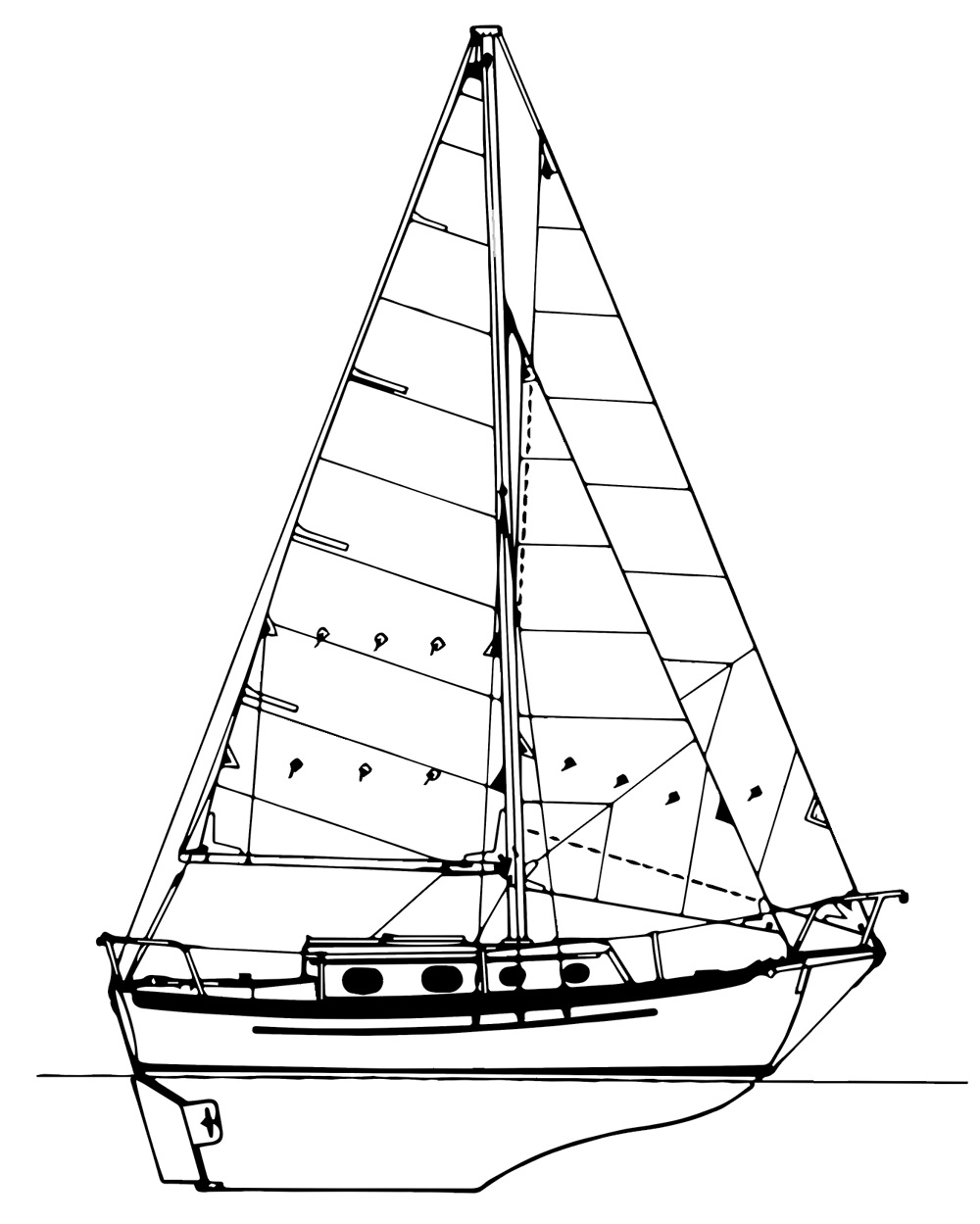
All that comes with a healthy amount of displacement: 8,000 pounds, which is a lot for a little boat. The full keel, which provides 3,200 pounds of ballast, is molded in.
Heavy displacement requires a good deal of sail area to keep the boat moving, so Crealock designed the Dana with a relatively big rig that came in both sloop and cutter configurations. The mast is deck stepped.
The Dana’s cockpit is big enough for up to six people to sit comfortably and 6-foot-long seats make it great for lounging or sleeping as well. In fact Crealock wrote that he felt the long seats were worth sacrificing some cabin space for exactly this purpose. High coamings make the cockpit feel secure.
The boat is remarkably spacious down below, where 6 feet of headroom makes it livable. A proper galley has a two-burner stove and oven, icebox, sink and a good amount of cabinetry. A desk forward of the galley serves as the nav station and folds out of the way when needed.
Four people can sleep aboard, with two settees and a 6-foot 8 inch V-berth. A dining table slides out from under the V-berth and, with a hinged center, fits around the interior post to be used full or partially extended.
There’s also a small head, hanging locker and several other storage areas tucked around the interior.
The Dana 24 was expensive for a 24-footer, but Crealock and Pacific Seacraft weren’t interested in compromises with a boat intended for big cruising. It’s held its value fairly well, with boats for sale starting in the mid-$40,000 range but often double that for newer boats decked out for world cruising
LOA 27’3”; LWL 21’5”; Beam 8’7”; Draft 3’10”; Displacement 8,000 lb.; Ballast 3,200 lb.; Sail Area 356 sq. ft.
Westsail 32
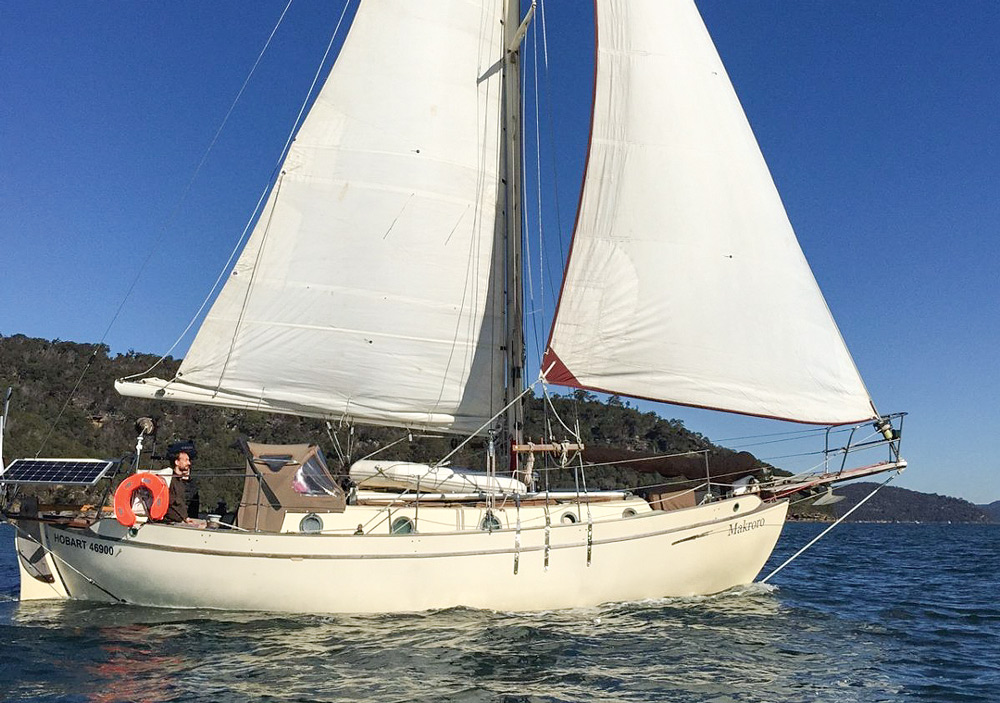
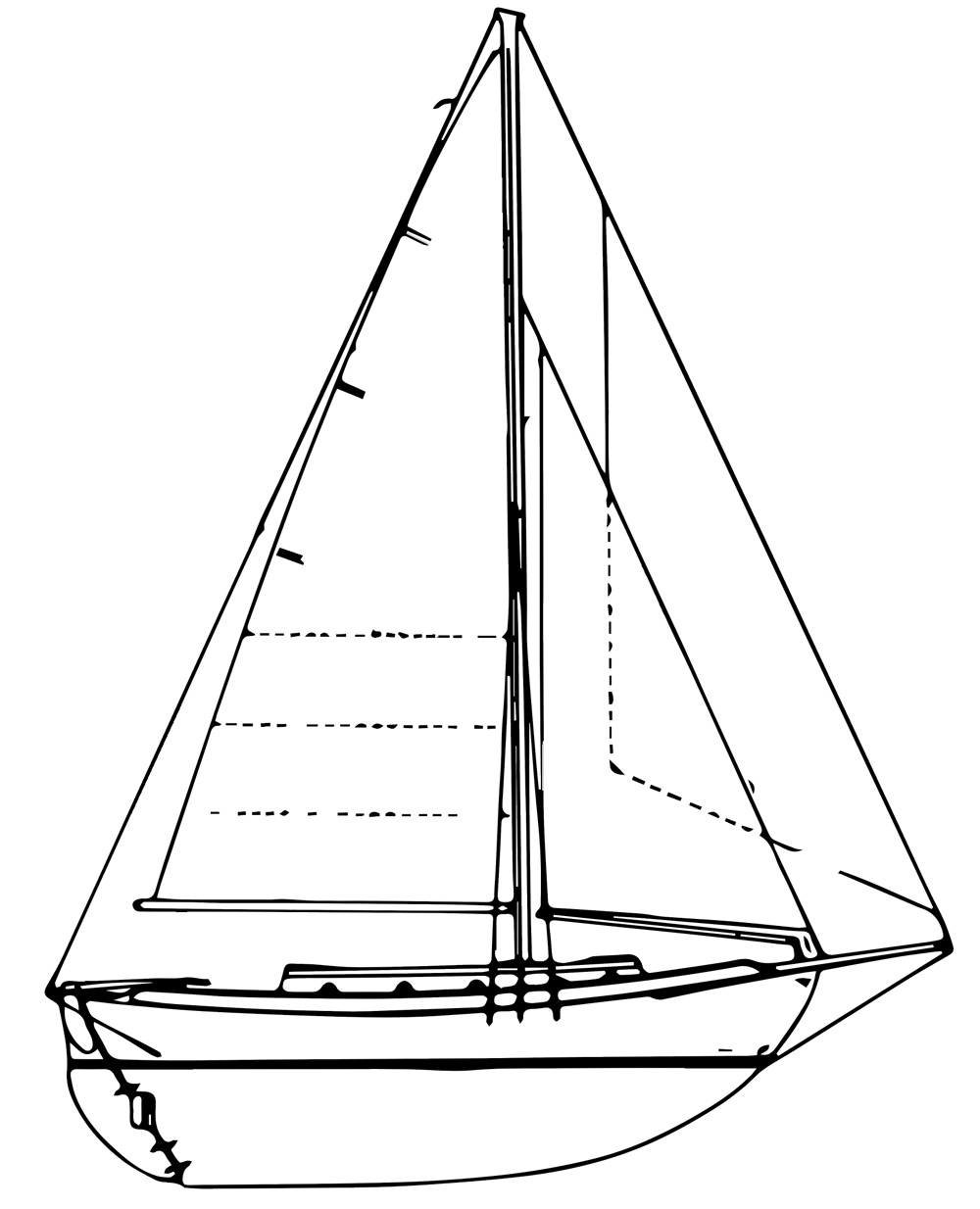
The Westsail 32 might offer just 32 feet of length on deck, but including the bowsprit and boomkin, it stretches to big-boat proportions at 40 feet, which allow a healthy 629 square feet of sail area.
And that’s been enough to convince many Westsail owners to head to sea, often with their families. The extra space afforded by a slightly bigger boat means long-term liveaboard sailing is not limited to just solo sailors or couples.
But the Hopkins are not alone. They joined a legion of Westsail owners who’ve circumnavigated and crossed oceans. Jerome Rand sailed a solo, nonstop circumnavigation in 2017 aboard his Westsail Mighty Sparrow.
The Westsail offers classic lines and classic build quality to match. With 19,500 pounds of displacement, there’s no getting around the fact that this is a heavy, full-keel boat, but they can be good performers in the right conditions. One owner reported that the boat is capable of averaging 150 miles a day with a steady 15- to 20-knot breeze.
It’s no surprise that the Westsail has some similarities to the Dana 24, as both were designed by Bill Crealock. The original design was tweaked n 1971 to add a cabinhouse, revise the interior and redesign the deck layout in 1971, and the boat gained popularity quickly.
Westsail produced more than 800 32s and about half of them were sold as hull-and-deck kits, allowing owners to fit out the interior.
The boat has a cutter rig that relies on the bowsprit for sail area and balance, and what the boat lacks in light-footedness, it makes up for in a voluminous interior. Down below, a large V-berth offers true comfort. A dinette, settee, true nav station on some models, reasonable-sized head, U-shaped galley and a quarterberth aft round out the living accommodations.
Getting used to sailing a heavy displacement boat can take some time, and one note found throughout the active class is that allowing the boat to get overburdened is not fast. Owner David King put the boat’s sluggish reputation to rest when he won the 1988 Transpac Race in a modified Westail 32.
n 1975, Westsail responded to criticism that the 32-footer was too pricey with the Westsail 28, a somewhat more refined boat in a smaller package with many of the same qualities of its big sister. Certainly it is equally rugged and has served as a platform for just as many excellent sailing adventures.
Westsail 32s on the market start at just under $30,000 and range up to past $50,000. Westsail 28s can be picked up for about half that.
LOD 32’; LOA 40’; LWL 27’6”; Beam 11’; Draft 5’; Displacement 19,500 lbs.; Ballast 7,000 lbs.; Sail area 629 sq. ft. www.westsail.org
Contessa 32

Full keels may offer a certain seaworthiness that is a comfort to sailors tackling oceans in small boats, but there are advantages to a slightly more modern design, and the Contessa 32, launched in 1971 bears that out.
Many sailors are familiar with stories of the boat’s seaworthiness even if they haven’t experienced it for themselves. The Contessa 32 Assent was the quiet hero of the infamous 1979 Fastnet Race, and solo sailors of all ages, including 15-year-old Seb Clover in 2007, have chosen it for transatlantic voyages and beyond.
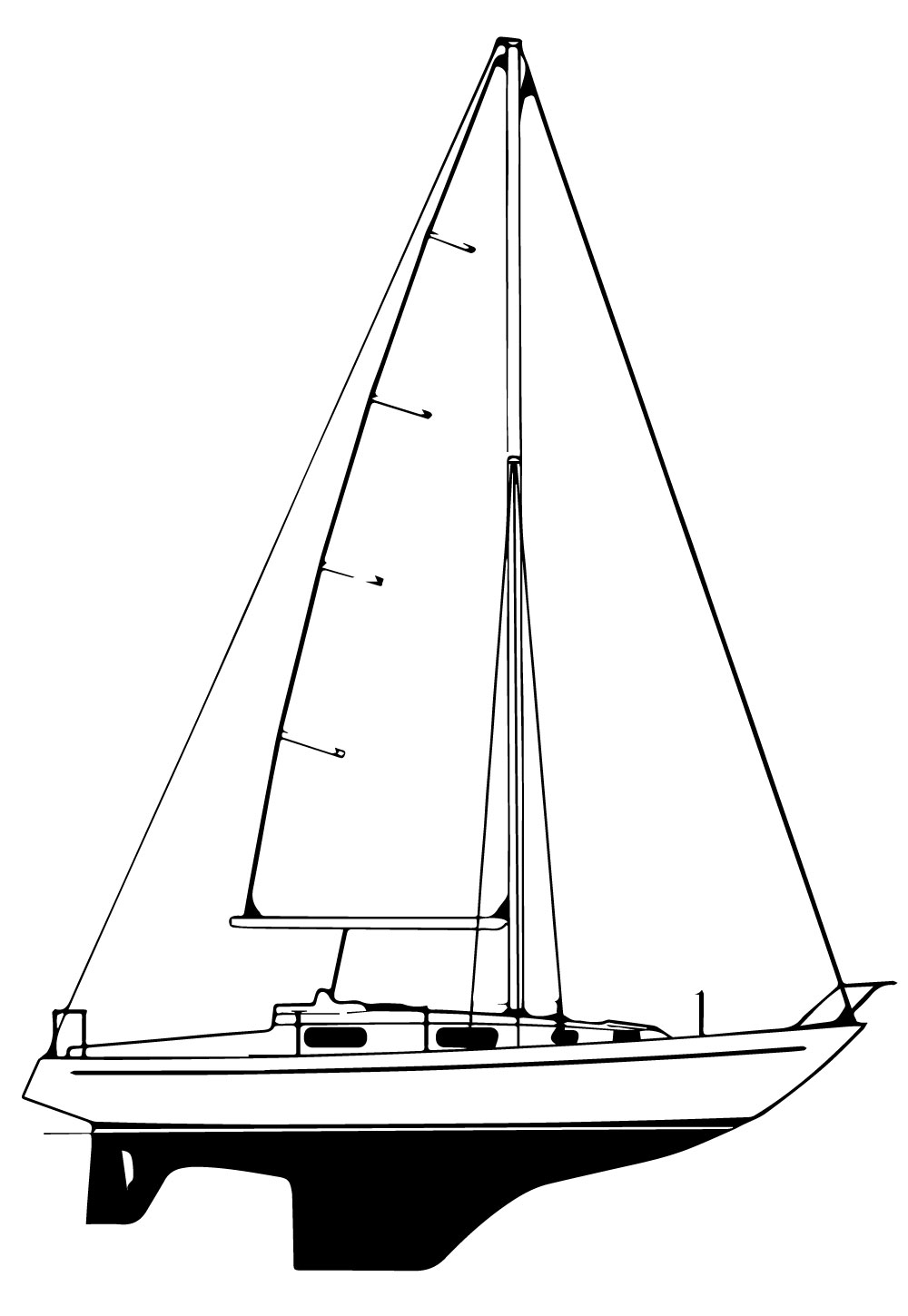
With just 24 feet of waterline length, the Contessa has fine bow and an IOR-style transom with overhangs that hint to its age. That’s not to say it’s not a good-looking boat, because the overall effect is graceful. Kretschmer wrote that he couldn’t remember ever sailing into a harbor without receiving compliments on Gigi.
Designed by David Sadler, boats were built both in England and North America and there are some differences between the boats and changes that happened throughout the production run.
The North American-built boats, for instance, were shipped with wheels, but English boats had tillers, although most long-distance cruisers rely on windvane steering to do the bulk of the work.
In the list of pros and cons for the Contessa 32, the pro side is stacked with sailing performance. The boat is close-winded, doesn’t pound and offers good speed for its size in most conditions. It also handles heavy weather with aplomb, as evidenced by its performance in the inhospitable waters of Cape Horn and that tragic Fastnet Race.
But there’s a price to be paid for that performance and its a small interior that will be less pleasurable to live in than some of the other boats on this list. There’s a smallish V-berth, a tiny head, a wraparound settee and table with a sea berth. But the boat does have a proper nav station. It’s probably not a boat that a family is going to want to pile on for a five-year cruise though.
Used Contessas sell for prices starting at about $20,000, but some very well maintained models are listed for twice that.
The Contessa might not be a great long-term liveaboard boat. It’s sailing characteristics, however, also make it a great racer and weekend cruiser. Because sometimes adventures close to home are just as exciting as those on the other side of the world.
LOA 32’; LWL 24’; Beam 9’6”; Draft 5’6”; Displacement 9,500 lbs.; Ballast 4,500; Sail area 562 sq. ft. www.co32.org


Comments